
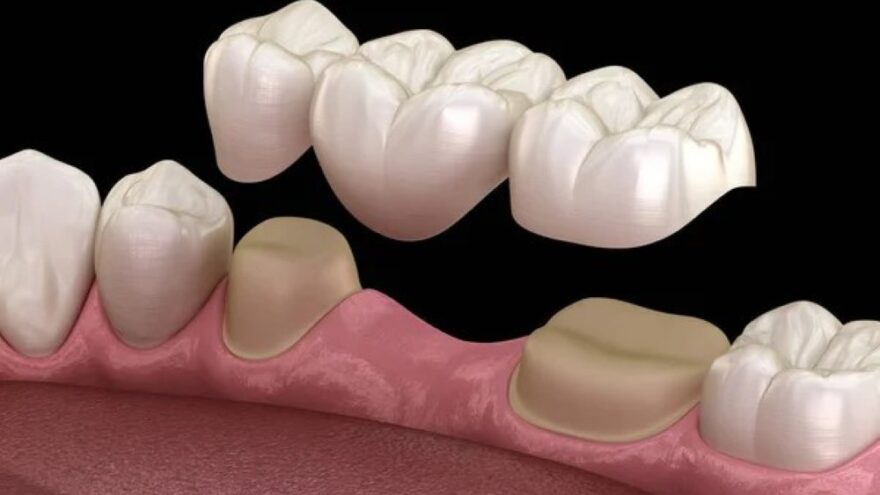
A dental bridge is a way for dentists to replace one or more missing teeth, helping to restore both functionality and appearance. It involves placing a false tooth (known as a pontic) in the gap left by the missing tooth. This pontic is held in place by two or more crowns on the surrounding natural teeth, called abutment teeth.
If you’re considering a dental bridge, it’s important to understand how it works, when it’s recommended, and what it means long term. Visit our Howell, NJ, office today for more information on bridges and our comprehensive dentistry services.
Do You Need a Dental Bridge?
A dental bridge is typically recommended when:
- You are missing one or more teeth in a row
- The neighboring teeth are strong enough to support crowns
- You want a fixed, non-removable solution
- You prefer to avoid surgery
A bridge uses the teeth on either side of a gap to anchor a custom-made replacement tooth. This restores function, maintains alignment, and helps prevent surrounding teeth from shifting.
What to Know Before Considering a Dental Bridge
Before deciding whether or not a bridge is right for you, there are a few aspects to consider. These include, but are not limited to, the following:
- Condition of Surrounding Teeth: for bridges, the supporting teeth must be reshaped to hold crowns. If they are completely healthy, we’ll review whether preserving them is the better long-term choice.
- Longevity and Maintenance: bridges typically last 10–15 years or longer with proper care. Daily brushing, flossing underneath the bridge, and routine checkups are essential to protect the supporting teeth.
- Dental Implants: sometimes, we’ll recommend dental implants over bridges for certain patients. Before any decision is made, we’ll discuss all options with you.
If you have any questions about dental bridges, restorative dentistry options, or general oral health, please feel free to consult with Dr. McOmber; she can help you make the right decision for your smile.
What to Expect During the Dental Bridge Procedure
Getting a dental bridge typically involves two appointments. During the first visit, Dr. McOmber will prepare the abutment teeth by reshaping them and removing a portion of enamel to allow room for the crowns. Impressions of your teeth will be made so the dental lab can create a custom bridge, and you’ll be fitted with a temporary bridge to protect your teeth and gums until the permanent one is ready.
For the next appointment, the permanent bridge is placed and adjusted for comfort before being cemented into place. Be aware that implant-supported bridges may take longer, involving multiple steps over several weeks or months, depending on the individual case.
My New Dental Bridge Feels Loose; What Should I Do?
If your new dental bridge feels loose for whatever reason, avoid chewing on that side and contact our office as soon as possible! Please do not attempt to adjust it yourself. Looseness can occur if the cement weakens or if there is an issue with a supporting tooth. We’ll diagnose the cause and set things right before more complex problems arise.
Why Choose McOmber Dental for Dental Bridges
Located in Howell, NJ, McOmber Dental only uses bridges crafted by a local technician with over 30 years of experience. We also have patients approve mock-ups before the final bridge is made. Best of all, Dr. McOmber holds a state sedation permit, meaning that every procedure is anxiety-free. For comprehensive dentistry, call today to schedule an appointment.